Course Overview
This 4-day course is built for wildland Rapid Extraction Module Support (REMS) teams that have to move hurt firefighters out of steep, dirty, remote country with a minimal rope cache and a small crew.
This is not a full "urban tech rope" class dropped into the woods. This course focuses on:
- Lightweight, hike-in rope systems that match the NWCG REMS PMS 552 model
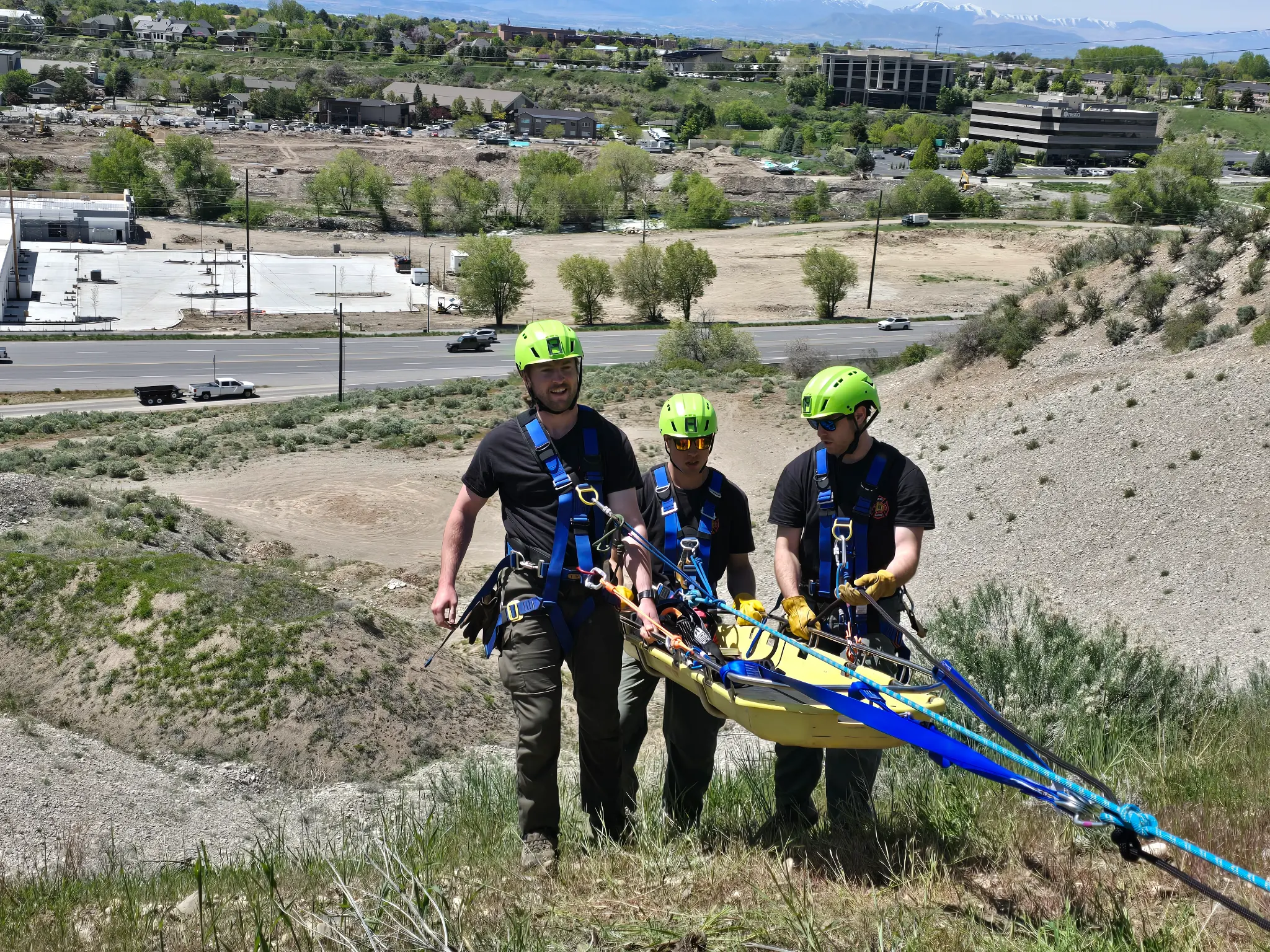
- Fast, repeatable litter movement over steep, loose, and brushy terrain
- Clean REMS integration into the Medical Unit / ICS medical plan on large incidents
You'll build and run simple-but-smart systems—low and steep angle, short vertical problems, directional assistance, and multiple-pitch litter moves—using only what a REMS hike-in cache can realistically carry.
Who This Course Is For
Core Skills & Objectives
REMS Role & ICS Integration
- REMS typing, capabilities, and limits per NWCG PMS 552
- Integration into incident organization (MEDL, Operations)
- ICS-206 planning and incident-within-incident extraction
- ICS-214 tracking and demob requirements
Minimal Rope Cache & Gear
- Hike-in REMS rope cache configuration (9.5-12.5mm rope, prusiks, limited pulleys)
- Mission-specific gear prioritization
- Standardized kits and packing for rapid deployment
- PMS 552 MEL guidance compliance
Backcountry Anchors & Terrain
- Fast, bombproof anchors using natural features and pickets
- Terrain use to reduce system complexity
- Safe work areas on steep, ash-covered slopes
- Fireline improvement integration
Minimal Systems for Litter Movement
- Simple main/belay and twin-tension systems
- Low and steep-angle lowers/raises on narrow fireline
- Multi-pitch evacuations with system resets
- Litter wheels and trail clearing integration
Directional Assistance & Vertical Problems
- Quick directionals and simple offsets
- Edge transitions without full tower solutions
- Simplicity-focused problem solving
- Clearing logs, rock steps, and drainage edges
REMS Team Movement & Safety
- Cohesive REMS element movement (no split teams)
- Lookouts, comms, and hazard ID
- UTV/transport platform integration
- Litter-only egress planning
Scenario Work: REMS on a Live Fire
Run full-length scenarios from briefing and medical plan review through demob:
- Ankle fracture on steep handline
- Chainsaw injury in a chute
- Medical emergency in a spike
- Litter move to UTV or helo LZ
Conduct structured hot-wash and capture lessons learned to bring back to the home program.
Training Methods
- Short, targeted classroom blocks: REMS standards, ICS integration, MEL, and mission planning
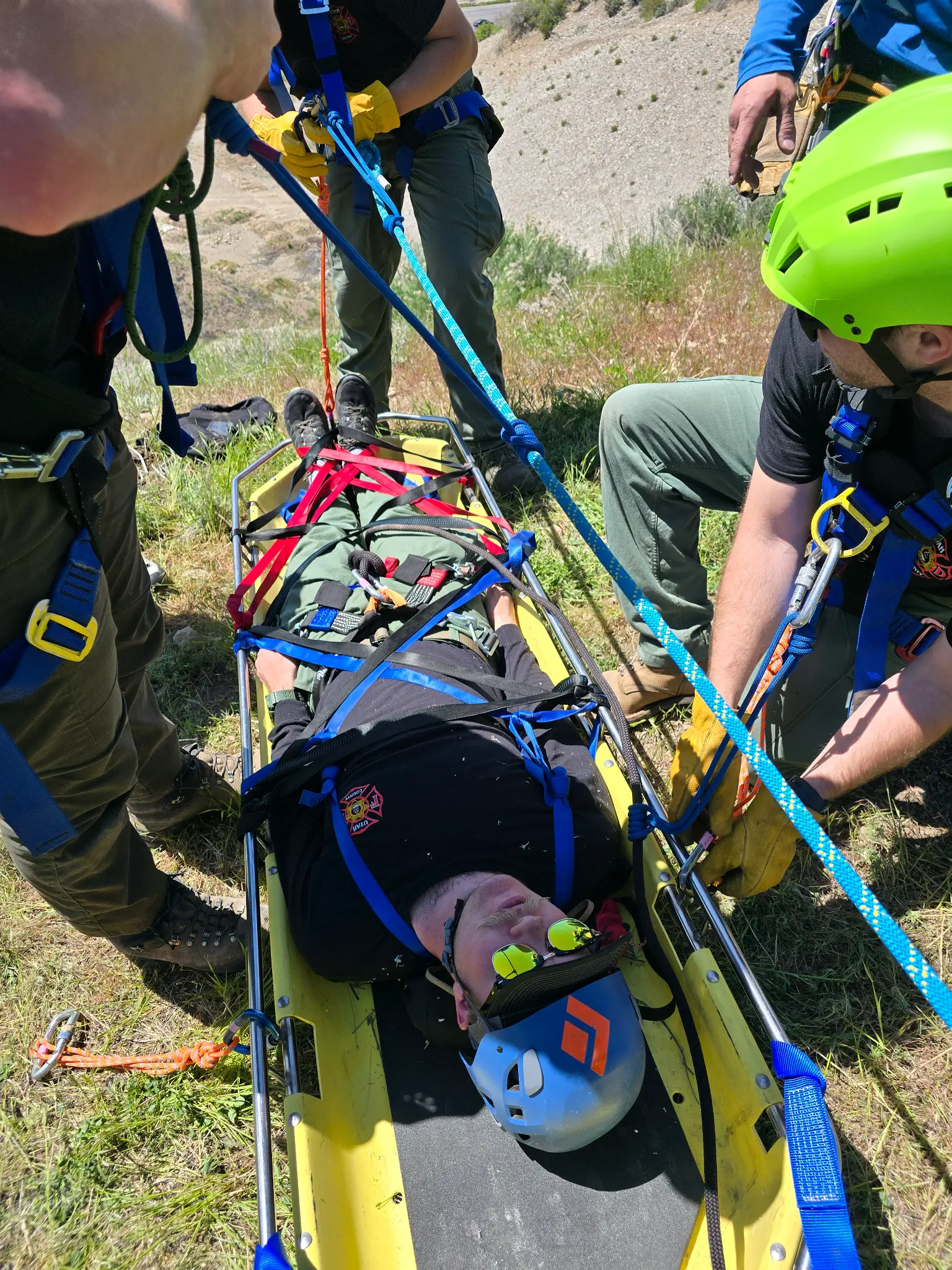
- Field-based rigging labs focused on one-rope and two-rope minimal systems on steep ground
- Progressive REMS evolutions: hike-in, package, move via multi-pitch, deliver to ALS/evac point
- Daily AARs aimed at cleaning up systems, tightening communication, and speeding deployment
Prerequisites & Required Equipment
Prerequisites
- • Current NWCG wildland firefighter qualification (FFT2 or higher)
- • Arduous Pack Test current per agency/AHJ
- • Rope Rescue Technician (or Operations + Technician-level skills)
- • Familiarity with ICS forms and wildland medical planning
Required PPE
- • Full wildland PPE (Nomex, gloves, boots, lid, line gear)
- • Headlamp, eye pro, hearing pro
- • Minimum personal survival gear
- • Agency radio programmed to incident standards
Compliance & Documentation
This course is designed to support NWCG REMS Standards (PMS 552) and current interim REMS training guidance, while ensuring rope techniques meet or exceed the AHJ's rope rescue technician requirements under NFPA 1006 / NFPA 2500.
Students who successfully complete all practical evolutions and written work receive a Wildland Fire REMS Backcountry Rope Rescue – 4 Day completion certificate documenting training hours, key REMS rope skill blocks, and scenario roles (rigger, litter captain, REMS lead, etc.).
Final qualification as REMS personnel and wildland deployment status remain with the Authority Having Jurisdiction (AHJ) and NWCG position standards.